
What Went Wrong? Brazil at the 2006 World Cup
Ronaldinho + Kaká + Adriano + Ronaldo = not a lot

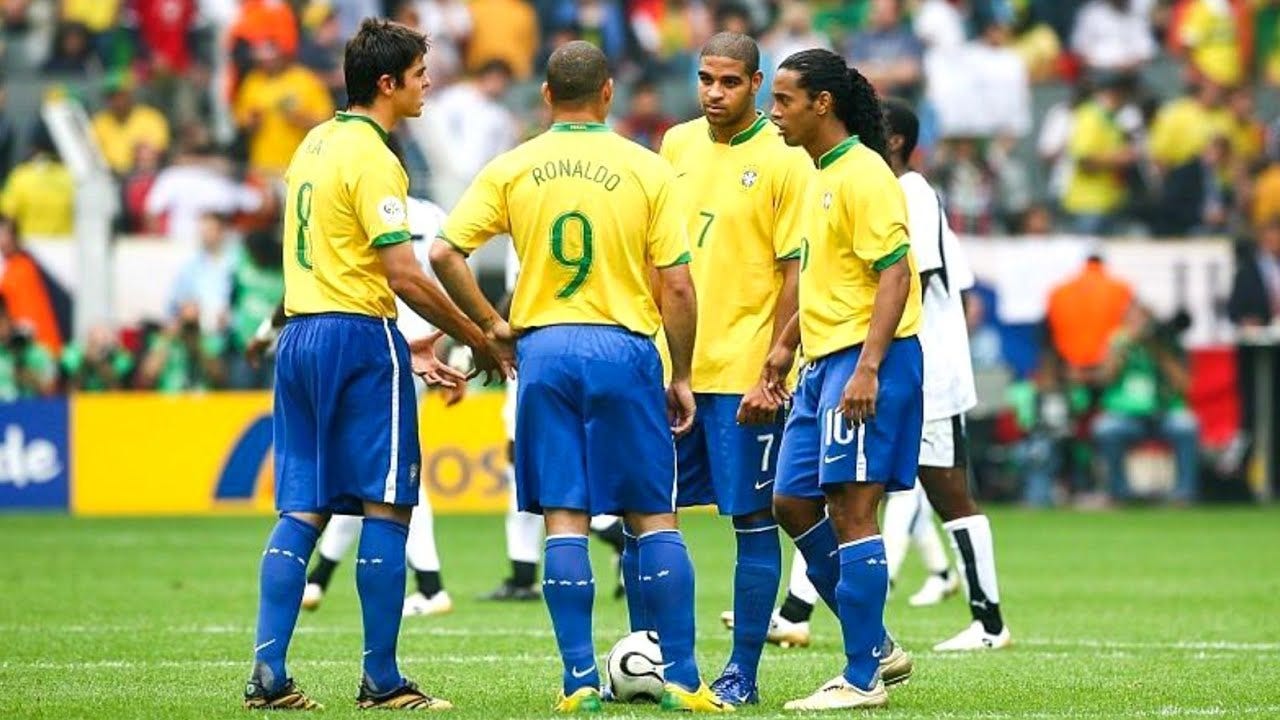
Welcome to another one of these retrospectives, on teams that were widely expected to be serious contenders in previous tournaments but, for whatever reason, it just didn’t happen at all. What went wrong? What are the key takeaways? Can we learn important things about how sides should approach the World Cup? I think these failures should tell us just as much as the success stories.
Content warning: brief mention of sexual assault
This was supposed to be easy.
There’s always going to be a great romance about Brazil at the World Cup, even when they don’t deliver. They were short of their best in the 1970s and ‘80s, but it didn’t really change the way the world looked at them. Brazil are the best, and they maintain this by playing the most entertaining and carefree style of football. Or so people say.
The second great era of the Seleçao wasn’t quite so flamboyant. Brazil ended a 24-year wait to win the World Cup in 1994 by getting more solid. The manager, Carlos Alberto Parreira, was a pragmatist who played a compact 4-4-2 shape built around moments rather than continued spectacle. As noted brilliant football writer Grace Robertson put it a few years ago:
“24 years after that golden run of three World Cup wins in four tournaments, this return to the top arguably set the template for Brazil going forward. They would be physical and disciplined in midfield, rely on flair only in the final third, and have the solidity to compete with anyone. It was elements of good football built to win. Sometimes that would work tremendously well. Other times it would be a disaster. But right there in California in 1994, it had rebooted the Seleção. Brazil were back and certainly deserved their title.”
1994 was the first time Brazil picked a squad with around half playing their club football outside their native country. This trend would obviously continue to the point where we just assume an entirely Europe-based starting eleven. This made them feel less “exotic” to those of us from outside South America, but it worked. Brazil were looking more and more like a European side, and they were getting results. The ‘94 win was followed by a final defeat in 1998, but they were back on top in 2002. That version played much better football than the gritty side from ‘94. The 3-4-3 shape got Roberto Carlos and Cafu high up the pitch in wide areas, creating more space for a delightful front three of Ronaldinho, Rivaldo and Ronaldo. They were just the best.
Luiz Felipe Scolari resigned after the victory, wanting to try his hand at managing a European team. Not to worry. Brazil played it safe by re-appointing Parreira, with all his experience in winning a World Cup. They had a proven formula. You could bet your house on Brazil turning up in Germany that summer.
Parreira knew the team he wanted. “The side he built had Ronaldinho in the forward line alongside Ronaldo, Kaka operating behind them and a midfield trio of Juninho on the right, Emerson holding the fort and Ze Roberto on the left”, wrote Tim Vickery in 2006. This was an efficient side, but not a popular one. As time went on, Parreira couldn’t ignore Adriano, the Inter Milan striker deemed the next big thing in Brazilian football. A front three became a front four, which meant an altogether different style of football. The side got faster and more direct. "Every time you lose the ball, Brazil kill you”, said Argentina manager José Pékerman after losing to Parreira’s side. “They are not what people think. They don't dominate you. They're a counter-attacking team.”
That was the side that breezed through South American qualification, especially notable after Brazil struggled so much to qualify in 2002. Brazil had the best players. They had the manager with his head screwed on. They were the whole world’s favourites. Everything should work out fine, right?