
World Cup: Quarter Finals 3/4

Thanks for bearing with me here as this one is a little late. Dental drama has still been happening, though the pain isn’t so bad for now and the dentist seemed to believe I should be done with the worst of it now. Let’s talk football.
England 2-1 Norway
In the endless discourse, there’s a question around this team at major tournaments that I’m surprised doesn’t come up more often, especially from people outside the UK:
What even is “England”, anyway?
Viewers might be forgiven for thinking it’s the United Kingdom, except Scotland also played at the World Cup. So that can’t be right. Scotland is also a part of the UK. So that just makes things even more confusing.
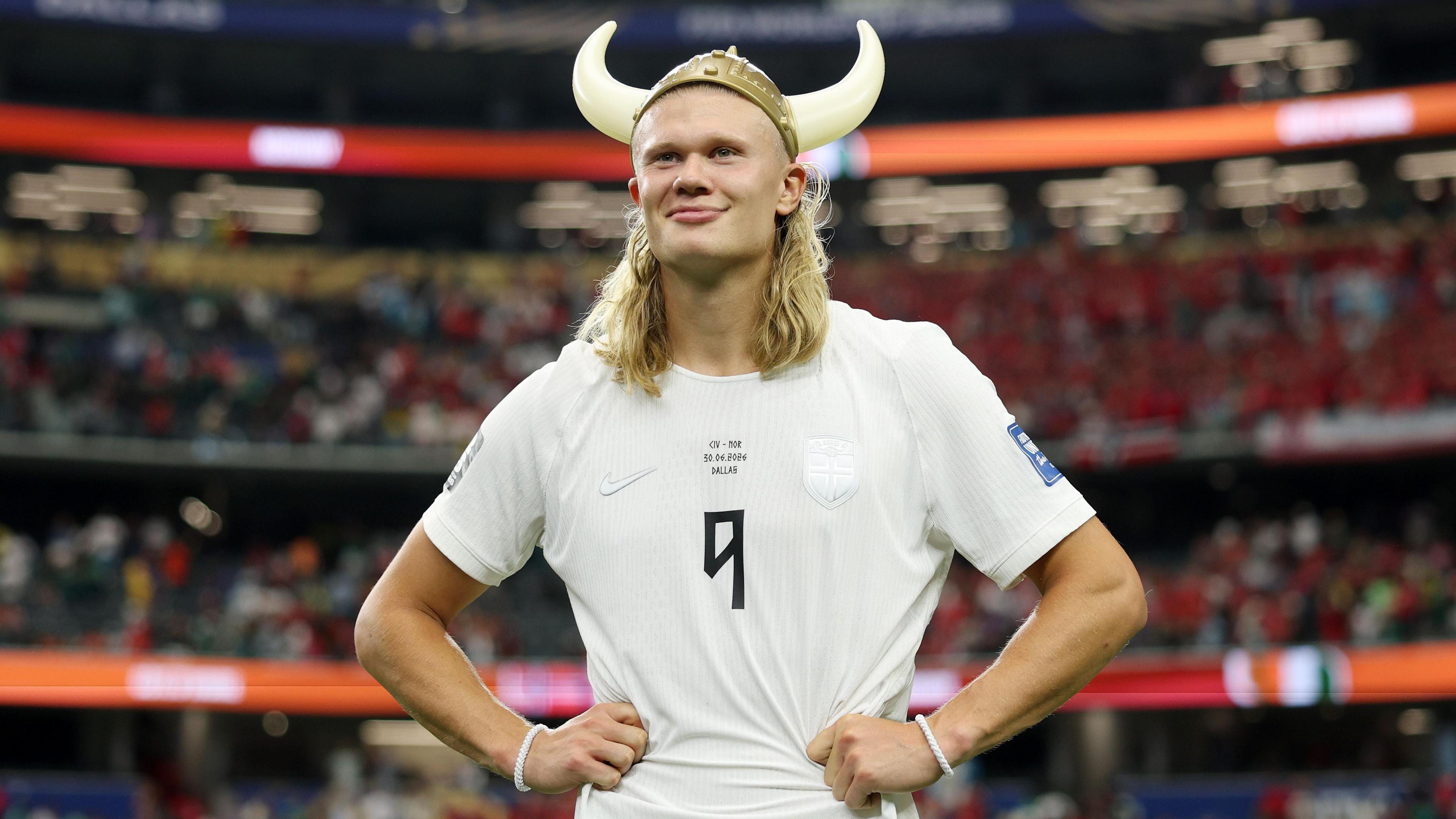
When Erling Haaland flew into North America to play at this World Cup, he did so on a passport that said “Norway” on the front. When Lionel Messi did the same, he used a passport that said “Argentina”. When Kylian Mbappé arrived in North America, his passport said… well, it said “République française”, but everyone knows that means France.
When Harry Kane flew in, his passport said “United Kingdom”. Nowhere on the document does the word “England” even appear.
It gets weirder. There are currently 211 FIFA member states (meaning “countries with official football teams”). Of those, 210 have their own governments. Even if Scotland is not a sovereign state, there is a thing called the Scottish government that does some governing in Scotland.
There is no government of England. There is almost no real institutional England. And yet they have a football team at the World Cup and no one finds it weird. So what even is this place?
Historians, please stop reading and scroll past my ludicrously oversimplified version of events from someone who doesn’t know what she’s talking about.
The place we now know as Great Britain was divided into various groups of people in different regions since I guess whenever humans first set foot there. When the Romans arrived, they colonised the majority of the island they called Britannia, while the northern part they couldn’t permanently conquer was known to them as Caledonia (which eventually became something vaguely resembling Scotland, but that’s a story for another day). After the empire, Roman-ruled Britannia collapsed into various kingdoms, with some of those to the west gradually being seen as a separate place we now call Wales. Ok, so Scotland and Wales exist, but we knew that. They have governments and everything. What about England? Why is that a thing instead of a bunch of kingdoms?
Well, it’s time to talk about the other team here. It’s time to talk Vikings.
When the Vikings started coming, “England” was broken into many kingdoms, the four most powerful being Northumbria in the (duh) North, Mercia in the Midlands, East Anglia in the you’ll-never-guess-where and Wessex in the South. The invaders from Scandinavia crushed the Northumbrian kingdom pretty quickly, taking over much of the North before turning their eyes to East Anglia and eventually Mercia. Wessex was the major holdout able to survive, with its rulers gradually clawing back land and eventually becoming the first people to ever rule almost all of what we now consider “England” as a single kingdom when they conquered York in 927.
York and other parts might have changed hands a few more times after that, but the notion that England could be one entity ruled by a single monarch was now in place. This set the scene for Danish rule the following century, with King Cnut briefly overseeing a North Sea empire formed of Denmark, England and… Norway.
So one might say this game has some history attached.
Thomas Tuchel’s major considerations were about fitness and availability more than tactics. Neither Reece James nor Djed Spence were fully fit, while Jarell Quansah was suspended (no comment). He thus opted for Ezri Konsa at right back, with John Stones coming in at centre back. Bukayo Saka still didn’t have 90 minutes in him, so Noni Madueke was chosen on the right instead. But Declan Rice made it into the starting lineup despite his own fitness concerns.
Tuchel used Rice differently to any previous game, playing him as the deepest midfielder instead of having Elliot Anderson sit behind. This might have been because Rice couldn’t run as much as usual, or it might have been a tactical move to get more physical presence in deeper areas. England dominated the opening period comfortably while creating almost nothing. The game looked incredibly sterile, with Norway sitting deep unable to pack a punch and England passing it sideways with no threat.
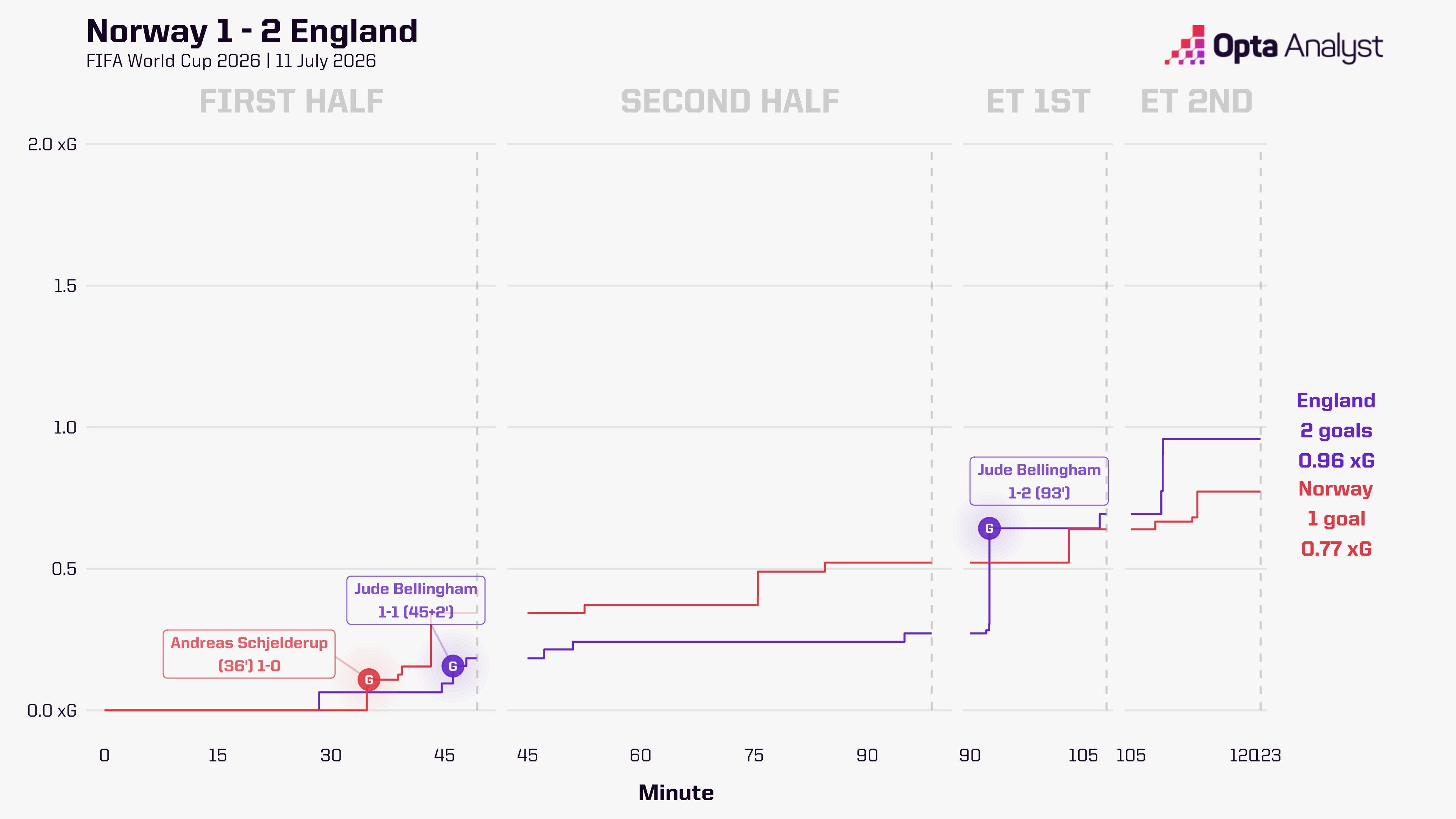
The game started to open up more, with Norway taking more risks and realising England were pretty vulnerable to getting pressed. The goal itself comes that way, as they win the ball back from Harry Kane before Andreas Schjelderup scores either a stunning shot or a mishit cross from the left. Either way, the end result is the same and it’s 1-0.