
What are Real Madrid DOING?
The Special Club?

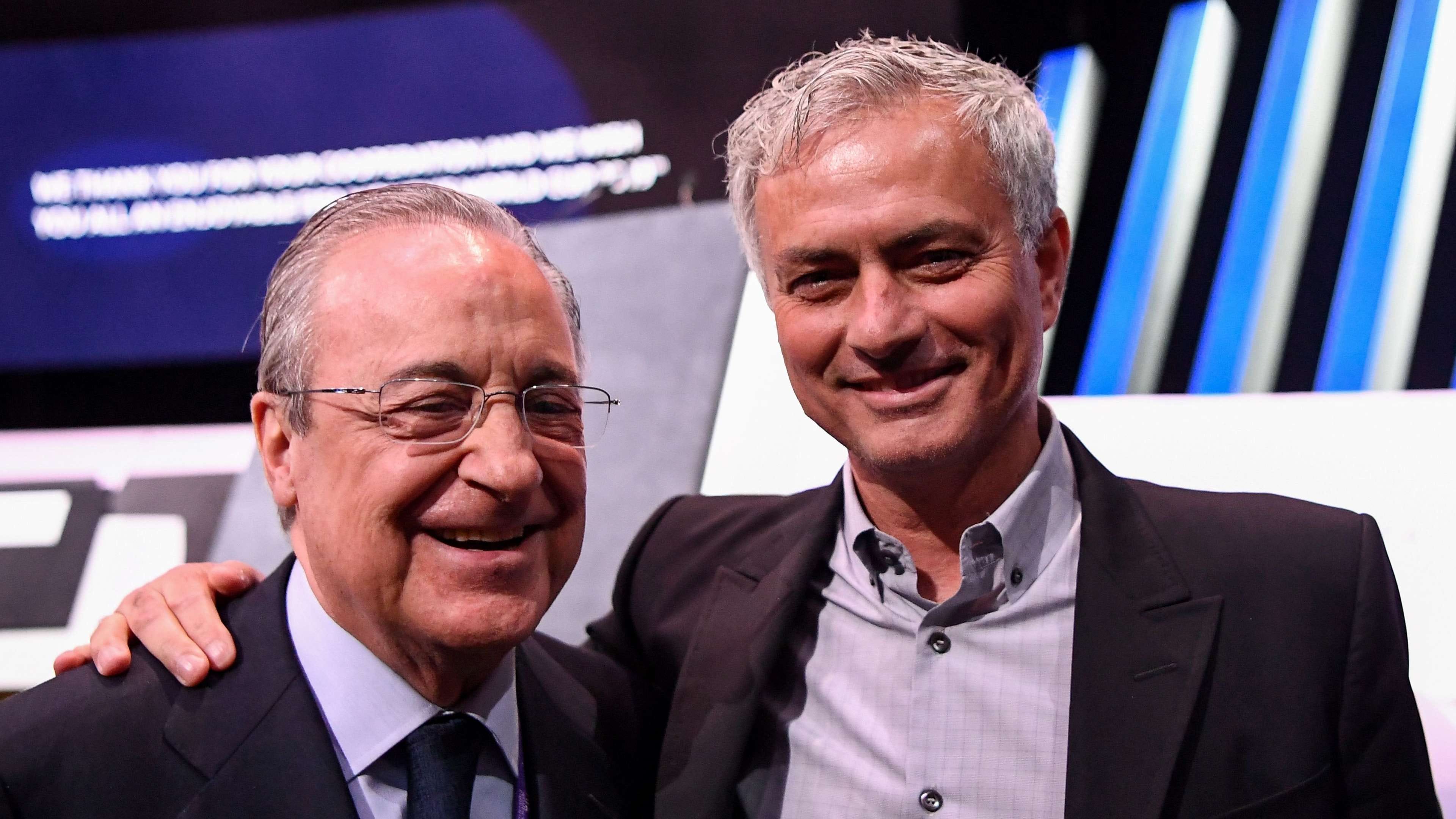
Real Madrid, we keep having to be reminded, aren’t like other clubs.
Well, they’re like other clubs used to be. Arguably, they’re the ones that haven’t changed. We’re all living in Pep Guardiola’s world, everywhere except in Madrid. Almost every other big club has spent the last 15 years trying to integrate a proactive style of football built around dominating possession and pressing, with a coach trying to teach a philosophy to a squad aiming for cohesion rather than individual quality. It’s become very systematised and structured, many would argue to a fault. Whether it’s attacking or negative, basically every top club is all about structure and organisation now, at every level, that’s just how it is.
But not at Real Madrid. They have defined themselves as the anti-Barça, for multiple reasons. The most obvious is that they don’t, I think, want to be seen as copying Barcelona, and see themselves as the pioneers. The second reason is that what they’re doing works, with all those Champions League wins to back it up. But the fundamental story is that this is how Florentino Pérez runs things. He’s less “galactico” obsessed than the stereotype suggests, putting a correct emphasis on signing younger players and avoiding overstuffing the side with attackers. But he’s someone who favours impulsive decisions, personal connections, and a sense that he is in charge, not the coach or sporting director and certainly not some overriding philosophy.
When Madrid have tried to change, it hasn’t worked. The Xabi Alonso era was an experiment in bringing Barcelonaism to the Bernabéu, and it obviously did not take. The players rejected it, which makes the whole model unworkable. If Madrid really wanted to change, they’d have to undergo a transition period accepting fewer trophies, and that’s not happening. So it’s back to what works. Sort of.
If there’s one thing Pérez likes doing, it’s hiring managers he’s already worked with. Even Alonso played for the club, as did Álvaro Arbeloa (before working at the club as a youth coach). Before Alonso, the club employed Carlo Ancelotti in his second spell in charge. Before that, it was Zinedine Zidane in his second spell. Zidane was brought back due to the disaster of Julen Lopetegui, a relative outsider (who still played for the club and briefly managed the B-team), to bring things back to order less than a year after ending his first spell. Zidane’s first time in charge came about precisely because Pérez knew and trusted him, turning to the former superstar player after Rafa Benítez wasn’t exactly inspiring that dressing room. Benítez took over after Ancelotti’s first spell fizzled out, at a time before Pérez got locked into hiring trusted faces. Ancelotti initially succeeded because he was a relaxed personality who formed a trusted bond with the players, in stark contrast to his predecessor… José Mourinho.
Mourinho was at the peak of his powers when Madrid first hired him in 2010 having just won the treble with Inter Milan. That time in Spain was in many ways the beginning of his decline, but also delivered arguably his best and most effective side. His title-winning team in 2011-12 scored 121 times, setting the record for the most goals scored in a season in La Liga. Yes, they scored more goals than Guardiola’s Barcelona. No, it wasn’t exactly harmonious off the pitch, which caused real problems the next year, but it was something to behold.
That team set the tactical template he’d spend the next decade trying to recreate. It was a 4-2-3-1 shape built around asymmetry and counter-attacking with speed. Sergio Ramos and Pepe were the centre backs, with left back Marcelo allowed to get forward, but right back Arbeloa was much more disciplined. Xabi Alonso and Sami Khedira balanced duties in the midfield double pivot. Ángel Di María played a very Mourinho role as the hard-working and disciplined winger who nonetheless proved a crucial provider. Mesut Özil was the perfect number ten for this team, totally selfless in allowing some bloke called Cristiano Ronaldo to play very high on the left as the team’s primary attacking threat and goalscorer. Karim Benzema and Gonzalo Higuaín competed for the striker role, with Benzema linking better but Higuaín a more consistent goalscorer. This team didn’t have the ideas in possession of Barcelona, but they’re arguably the best counter-attacking side we’ve ever seen. Yes, it helps to have Ronaldo, but still, come on.
Real Madrid are singularly obsessed with winning the Champions League, so no one really remembers this team that “only” won La Liga, even if that is probably a harder task over a full season. After Mourinho seemed to fall out with the dressing room the following year, he left the club and returned to Chelsea, where he sought to copy his Madrid template. Gary Cahill and John Terry were at centre back. Right back Branislav Ivanović had freedom to get forward, while César Azpilicueta stayed deeper on the left. The midfield was a little different, with Nemanja Matić more of a pure water carrier to make up for Cesc Fàbregas, a brilliant creator who didn’t always provide the best work defensively. Willian was an ideal substitute for Di María as someone who could work hard on both sides of the ball on the right wing. Oscar copied Özil in taking up intelligent positions and being a foil for the real superstar on the left, this time being Eden Hazard. Diego Costa was the all-around centre forward threat. Different players; same template.
Of course, his combative personality again got the best of him in his second spell at Stamford Bridge, winning the league title before the players completely downed tools on him, and the third season descended into chaos. Chelsea had been worthy champions, though the Premier League was not at its strongest in that era. The season Mourinho’s side won it, second place went to Manuel Pellegrini’s Manchester City, followed by Arsène Wenger’s Arsenal. Mourinho’s teams simply had to be better coached and organised than that, with comparable firepower. Mourinho’s existing template was more cohesive than what Pellegrini or Wenger could coach, so it was relatively plain sailing.
During his next job at Manchester United, things were changing. Manchester City hired Pep Guardiola at the same time, while Jürgen Klopp was already at place at Liverpool and Mauricio Pochettino was earning himself a decent reputation at Tottenham. Antonio Conte had replaced Mourinho at Chelsea. All of these coaches – Guardiola being the driving force – embraced the newer model of structured ideas in both attack and defence. More concerningly, this had become standard across the Premier League. Mourinho’s model of more brute force counter-attacking with blistering pace was becoming less effective in an era where teams were structured enough to stop it. They were better able to sit in a low block and ask richer sides what to do in possession to break them down. Mourinho’s template hadn’t really considered this.
I’d go as far to say Mourinho’s entire coaching model has no room for this. Mourinho is football’s most famous advocate of “tactical periodisation”, the model of integrating tactical, technical, physical and psychological aspects into a single cohesive training model. This model, invented by football coach and university professor Vítor Frade, was one of the most revolutionary ideas to enter football in the last 40 years. “Many clubs do fitness work separately sending players for 45 minutes with a fitness coach”, Mourinho explained in 20051, “but I don't believe in this, because there are exercises that can improve your physical qualities using the ball. I make the players play a simple, small-sided game of football but they can only cross the halfway line if they are sprinting.
“Players don’t enjoy working without the ball, so why take it away from them? A great pianist doesn’t run around the piano or do push-ups with the tips of his fingers to be great; he plays the piano. The best way to become a great player is to play football.”
Every top club uses some aspects of tactical periodisation. Pepijn Lijnders is an advocate of it, for example, and his last two jobs have been as assistant to Pep Guardiola and Jürgen Klopp. Mourinho was a genuine pioneer here. But we’ve also moved on. Mourinho’s “pure” model of periodisation doesn’t allow for the kind of detailed work on patterns of play we associate with modern top sides. Mourinho’s teams will never develop “automatisms” — the kind of passing moves practised on the training ground so many times that they become second nature to the players — under his training model. This is something the Madrid players reportedly complained about during his first spell in charge.
His teams will never be able to really manipulate space in a possession-dominant way, and I don’t think this is something he’ll ever adapt to. His whole coaching model doesn’t allow for that work. Because every aspect of his training sessions are integrated into one whole, he’d have to completely start over and figure that out from first principles. He’s not going to change. The Mourinho we’ve seen is the Mourinho we’re going to get, end of.
But what if Real Madrid is the only big club where that’s ok?
“Some teams are a bit more structured in terms of the passing styles and the patterns of play”, Jude Bellingham said in April 2024, on the way to yet another Champions League win for Real Madrid under Carlo Ancelotti, “and it’s really interesting to watch, and it’s definitely difficult to play against, but I think one of our biggest strengths is that we’re so off the cuff.”
I don’t want to suggest that Real Madrid just don’t have the tactical issues that most clubs solve with structured positional work and automatisms. They do. But they’re not going to change their approach now. The Alonso experiment reinforced that this is how things are in Madrid. Players will do what players do. Tactical solutions need to be solved within that framework, probably by signing a really good deep-lying passing midfielder. It would be much harder to go against a cultural climate where players are used to a certain approach. In many ways, this is Mourinho’s ideal job.
In other ways, it’s his worst nightmare.
One of Alonso’s biggest failings at Madrid was his relationship with Vinícius Júnior. “It was a difficult moment because I was playing lots of games but I had not many minutes," the player explained. "But every coach has their own method, every coach has their things, and I think I wasn’t able to connect with what [Alonso] wanted and what the team needed.” Mourinho, meanwhile, used language some have called gaslighting after Vinícius accused one of the Benfica manager’s own players, Gianluca Prestianni, of racial abuse.
“Viní was not just happy to score that astonishing goal and the game was over. When you score a goal like that, you celebrate in a respectful way.
“I told [Viní] that when you score a goal like that, you just celebrate and walk back. When he was arguing about racism, I told him that the biggest person in the history of this club is Black. This club, the last thing that it is, is racist. If in his mind, there was something racist — this is Benfica.
“There is something wrong because it happens in every stadium. Every stadium where Vinicius plays, something happens. Always.”
Let’s leave aside the fairly ludicrous logic that Prestianni cannot racially abuse someone because Eusébio played for the same club 50 years earlier, and that Mourinho, of all people, cannot accuse anyone of celebrating too aggressively. Managing Real Madrid is a job about keeping the biggest stars happy and engaged. Only Viní himself can answer the question of how he feels about Mourinho, but things need to change here if the manager has any chance whatsoever of succeeding.
Viní is one high-profile example, but far from the only one. Mourinho favours a confrontational approach, which has both succeeded and failed at times in his career. He is not going to change here. Maybe all that macho bullshit is what the big personalities in the Madrid dressing room love. I don’t know. But this is what has to be true if things are going to work out for him.
From a distance, it seems like Pérez wants Mourinho specifically because he can be the alpha and set some of the players straight. I don’t know if that’s a good idea or not, but it’s Pérez’ big roll of the dice, because something bigger is coming. Something that could make this entire newsletter so far essentially redundant.
Pérez has lined up Mourinho as the next manager. But Pérez, frustrated and perhaps paranoid about his enemies lurking behind the scenes, called for a new election for the role of Real Madrid president in a bizarre press conference. Pérez is 79 years old, while his election opponent, Enrique Riquelme, is 37. Riquelme claims his project on the sporting side is radically different to what Pérez is going for. “We are going to appoint a coach who fits a long-term project”, he explained. “Members are going to feel very proud of the profile we bring to Real Madrid. This is a project designed to generate excitement from day one, but also to create a truly professional structure with hierarchy, organisation and real management capacity.
“Real Madrid cannot continue operating with short-term thinking. This is a moment for a genuine change of cycle. Of course, everything that has been achieved so far deserves recognition, but our proposal is about building a project for the short, medium and long term under a different model of professionalisation and modernisation.”
Riquelme “cannot say” whether Klopp is an option, which isn’t exactly a no. For what it’s worth, I’m unconvinced Klopp would be willing to take the job. He’s been clear many times in the past that he would not manage in a country where he lacks a strong grasp of the language, and, as far as we know, he does not speak Spanish. He seriously considered turning down the Liverpool job because he wasn’t sure he could work in a foreign language at all, and his English is excellent, so the bar is high here. He’s said over and over that he doesn’t miss being a football manager. Perhaps most importantly, his methods require a squad willing to run hard and learn a whole bunch of intricate movements with and without the ball.
Riquelme wants to turn Real Madrid into a “normal” club. Though he obviously can’t say it, he wants to make Madrid more like Barça, with a clear vision and philosophy that involves a manager coaching a progressive style of football. It seems like everyone expects Pérez to win, but it’s not like YouGov are out there polling the Real Madrid members. Winning the election would be a personal win for Pérez that guarantees Mourinho and, ultimately, keeps the club away from “Barcelonaism”.
Barcelona and The Gospel of Johan

On the 7th July 1974, Germany (then known as West Germany) won their second ever World Cup with a 2-1 victory over arch rivals the Netherlands on home soil in Berlin. About 300 miles away, in a small village in Baden-Württemberg, a nine-year-old Hansi Flick was almost certainly celebrating.
I do think there’s value in Madrid being different and staying the course. I probably wouldn’t hire Mourinho personally, but nor would I hire someone like Klopp and attempt to run this club like every other one out there. Infuriatingly, the Madrid election is happening four days before the start of the World Cup, so I won’t have time to write about it if Riquelme pulls off a shock win.
Mourinho always brings fireworks, but Madrid will probably provide them anyway this time.
as found in the book Zonal Marking by Michael Cox